
Table of Contents
ToggleIn a world where kids can recite the latest TikTok dance moves but struggle to spell “cat,” child education has never been more crucial. It’s not just about teaching them how to add and subtract; it’s about equipping them with the skills to navigate a future filled with challenges and opportunities. After all, today’s learners are tomorrow’s leaders, innovators, and perhaps even the next great cat meme creators.
Importance Of Child Education
Education plays a crucial role in shaping a child’s future. It fosters essential skills and prepares children for a rapidly changing world.
Cognitive Development
Cognitive development occurs as children engage with educational content. They enhance critical thinking abilities through problem-solving exercises. Skills like reading comprehension and logical reasoning emerge during early schooling years. Research shows that quality education leads to improved memory retention and information processing. Studies indicate that children exposed to diverse learning experiences perform better academically. Each subject contributes uniquely, paving the way for a rounded intellect.
Social Skills Development
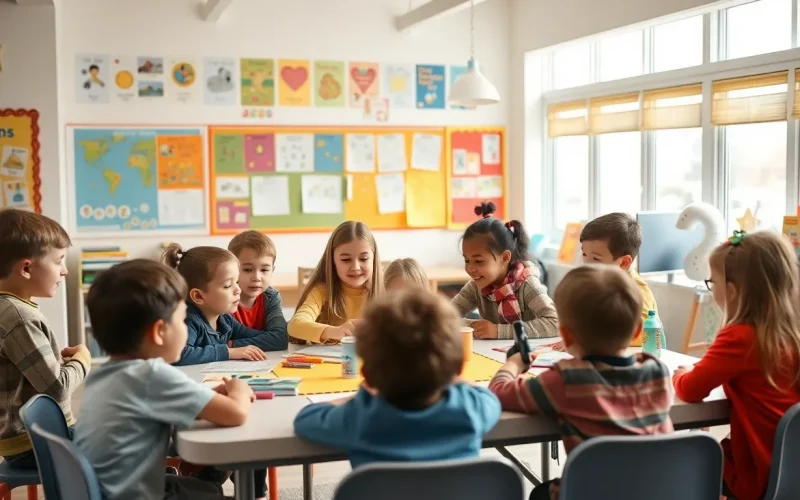
Social skills development hinges on effective communication and teamwork. Interaction with peers in educational settings fosters collaboration. Children learn to express their thoughts clearly and listen actively. Participation in group activities encourages conflict resolution. They build friendships that can last a lifetime through shared experiences. Education offers valuable lessons in empathy and respect for diversity. Schools provide a structured environment where social norms are reinforced, contributing to well-balanced individuals.
Different Educational Approaches
Various educational approaches aim to enhance child education. Each method offers distinct benefits tailored to the child’s learning style.
Traditional Education
Traditional education emphasizes structured learning through standardized curricula. This approach primarily utilizes lectures, textbooks, and assessments to gauge student understanding. Teachers play a central role as knowledge providers, guiding students through subjects such as math, science, and literature. Classrooms typically consist of age groups, promoting socialization among peers. While this method may prepare students for standardized tests, it fosters some dependence on rote memorization rather than critical thinking.
Montessori Method
The Montessori method promotes independence and self-directed learning for children. Teachers act as facilitators, observing students as they explore a prepared environment filled with hands-on materials. This approach emphasizes respect for the child’s individual learning pace, encouraging exploration and discovery. Students engage in collaborative activities, fostering social skills and cooperation. This method often improves problem-solving abilities and intrinsic motivation, allowing children to develop a love for learning.
Waldorf Education
Waldorf education prioritizes creativity and imagination while nurturing the whole child. This approach integrates arts, music, and movement into the curriculum, ensuring a balanced education. Learning often occurs through storytelling and experiential activities rather than traditional academic subjects. Teachers focus on developing emotional intelligence, social awareness, and critical thinking. Students enjoy a strong sense of community and collaboration, leading to well-rounded personal development.
Role Of Parents In Child Education
Active parental involvement significantly impacts a child’s educational success. Parents create a supportive environment that encourages curiosity and learning at home.
Encouraging Learning At Home
Engagement with educational materials can spark interest in various subjects. Reading together fosters comprehension and vocabulary growth. Incorporating games that promote problem-solving enhances critical thinking skills. Parents who ask open-ended questions stimulate discussion and exploration. Involvement in daily activities, such as cooking or gardening, provides practical applications for math and science concepts. Establishing a consistent routine helps children adapt to structured learning. Prioritizing educational television programs and apps allows parents to integrate fun with learning.
Supporting School Activities
Participation in school events strengthens the connection between home and school. Volunteering at school helps parents understand the curriculum and their child’s social dynamics. Attending parent-teacher conferences enables insight into academic progress. Encouraging involvement in extracurricular activities, such as sports or arts, nurtures teamwork and creativity. Parents who advocate for their child’s educational needs build a foundation for effective communication. Supporting homework routines reinforces the importance of educational responsibilities. Providing resources, like books and supplies, ensures children are prepared for school success.
Challenges In Child Education
Child education faces numerous challenges that hinder effective learning and development. Understanding these challenges can lead to better solutions and improved outcomes.
Learning Disabilities
Learning disabilities impact a child’s ability to process information. Conditions like dyslexia or ADHD affect reading, writing, and attention spans, making traditional learning methods less effective. Targeted strategies help children cope with these challenges. Specialized tutoring and individualized education plans (IEPs) address specific needs, enabling children to succeed academically. Teachers trained in recognizing and accommodating learned disabilities provide a supportive learning environment that fosters growth and confidence.
Access To Resources
Access to educational resources varies significantly among families. Some children in lower-income areas face limitations in books, technology, and extracurricular programs. These barriers create disparities in learning opportunities. Schools with adequate funding can offer better resources, including updated materials and technology integration. Partnerships with community organizations enhance accessibility and provide additional support. Ensuring equitable access to resources helps bridge the learning gap and promotes academic achievement for all children.
Child education is more than just academics; it’s about preparing children for a future full of possibilities. By fostering essential skills and encouraging social development, education lays the groundwork for lifelong success. Parents play a pivotal role in this journey by creating supportive environments that stimulate curiosity and engagement.
As various educational approaches demonstrate, tailoring learning experiences to individual needs can significantly enhance a child’s growth. Addressing challenges such as learning disabilities and resource disparities is crucial in ensuring that every child has access to quality education. Ultimately, investing in child education today shapes the leaders and innovators of tomorrow, paving the way for a brighter future for all.