
Transferring an iPhone to someone else can feel like handing over your favorite toy to a sibling—exciting yet a tad nerve-wracking. Whether it’s upgrading to the latest model or passing your trusty device to a friend, knowing how to transfer your data smoothly is key. After all, nobody wants to leave behind cherished photos or that playlist that gets them through the Monday blues.
Understanding iPhone Transfer
Transferring an iPhone involves moving data between devices effectively. Various methods exist for this process, including iCloud, iTunes, and Quick Start. Each option caters to different user needs and scenarios.
iCloud allows users to back up their data over Wi-Fi. This method keeps photos, contacts, and apps synchronized across devices. Users can initiate this backup by navigating to Settings > [Your Name] > iCloud > iCloud Backup.
iTunes provides an alternative for users who prefer wired connections. By connecting the old iPhone to a computer, users can create a full backup, which can then transfer data to the new iPhone. This includes apps, settings, and personal files. Users can access this feature through iTunes by selecting their device in the application.
Quick Start simplifies the transfer process for users upgrading to a new iPhone. This feature streamlines data migration by using Bluetooth to connect both devices. Users can activate Quick Start by placing the new device near the old one, following on-screen prompts.
Transferring data includes managing several elements. Photos, messages, and playlists hold significant value for users. When performed correctly, the transfer retains treasured memories and personal information efficiently.
Prioritizing security during the transfer process is essential. Users should ensure that both devices run the latest versions of iOS to minimize issues. Also, confirming that all data is backed up before initiating the transfer safeguards against data loss.
Understanding these methods empowers users to navigate the transfer process confidently, ensuring a seamless transition between devices.
Methods To Transfer iPhone To Another
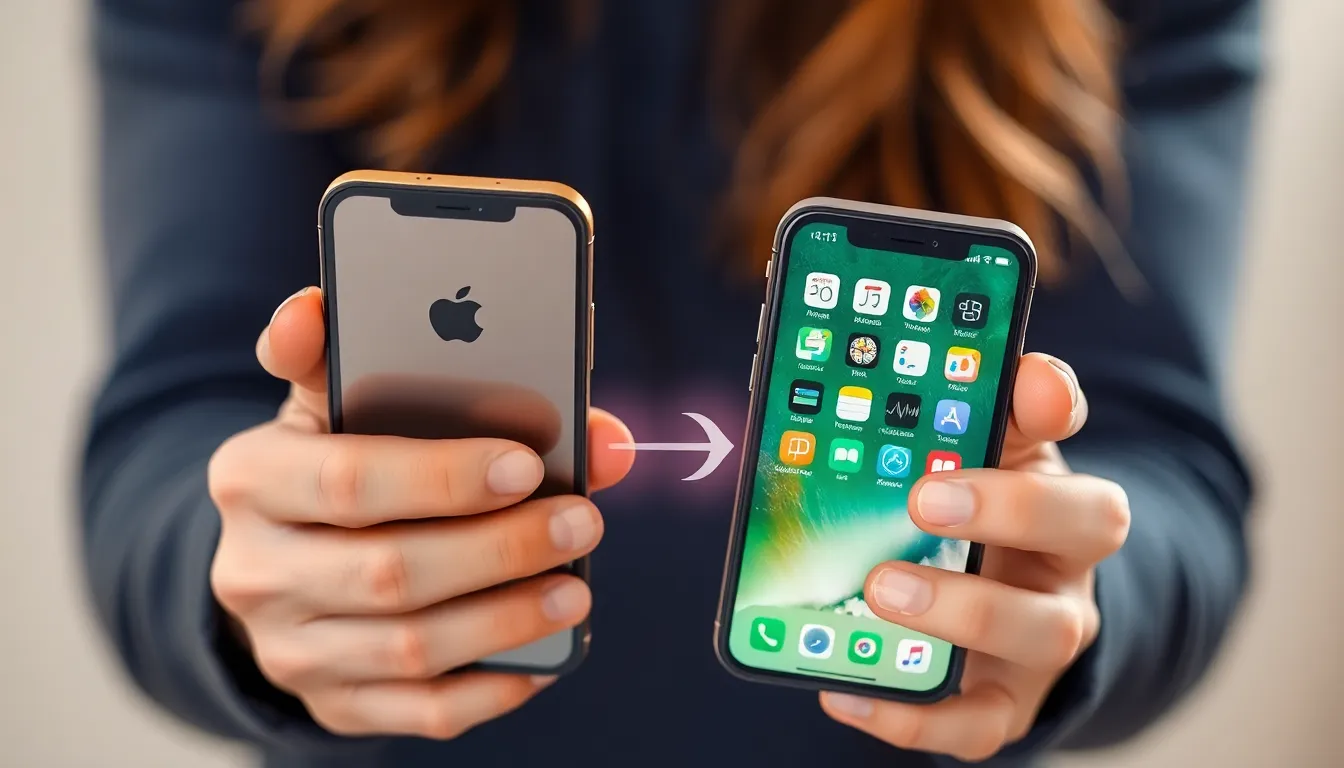
Various methods exist for transferring data from one iPhone to another, offering flexibility based on user preferences.
Using Quick Start
Quick Start provides a seamless way to transfer data when upgrading to a new iPhone. It requires both devices to be on and Bluetooth enabled. Hold the old iPhone near the new one, and a prompt appears on the screen. Follow the on-screen instructions to authenticate and initiate data migration. This method ensures that users can transfer settings, apps, and personal data quickly. Compatibility with iOS 11 and later makes it accessible for most iPhone users.
Using iCloud Backup
iCloud Backup offers a wireless approach for transferring data to a new iPhone. Users need to connect their old device to Wi-Fi and navigate to Settings. Tapping on their name and selecting iCloud, they can then choose the Backup option to back up data. After backup completion, turning on the new iPhone allows users to select “Restore from iCloud Backup” during setup. This method stores data securely, allowing easy access to photos, messages, and other essential files. An existing iCloud account with enough storage is necessary for this process.
Using iTunes
iTunes provides a reliable way to transfer data with a wired connection. Users must connect their old iPhone to a computer using a USB cable and open iTunes. After selecting the device icon, they can click on “Back Up Now” to create a complete backup. Once the backup is complete, disconnect the old iPhone and connect the new device. Selecting “Restore Backup” in iTunes then transfers all data, including apps and settings, to the new iPhone. This method is particularly beneficial for users looking for a thorough data transfer solution.
Transferring Data Selectively
Transferring data selectively allows users to choose specific items during the iPhone transfer process, ensuring only the most important data moves to the new device.
Third-Party Applications
Numerous third-party applications facilitate selective data transfers. Apps like AnyTrans, Dr.Fone, and MobileTrans support transferring photos, messages, and contacts without moving unnecessary data. Compatibility with both old and new devices streamlines the process. Users install the application on their computer, connect devices via USB, and follow simple prompts to select and transfer desired files. Advanced features permit users to preview content before transferring it, ensuring accuracy. Many of these applications offer user-friendly interfaces, making it easy to navigate through the available options.
Manual Transfer Options
Manual transfer options provide an alternative for those who prefer a hands-on approach. Users can manually copy important photos and documents by connecting their iPhones to a computer using USB. From there, it’s possible to access files through Finder on macOS or File Explorer on Windows. Copying selected items to a designated folder enables users to transfer only what they need. Users can also use AirDrop to transfer files directly between devices, selecting individual photos or documents quickly. This method preserves valuable data while eliminating unwanted content during the transition.
Troubleshooting Common Issues
Users may encounter several issues during the transfer process. Connectivity problems often arise when using Quick Start. Both devices need Bluetooth enabled and connected to the same Wi-Fi network. If not, users should ensure that settings are configured correctly.
Data not appearing on the new device can happen with iCloud. This issue may stem from not completing the backup on the old iPhone. Users should check their iCloud storage to confirm enough space exists for the backup and verify the backup completed successfully.
Transferring large amounts of data through iTunes can sometimes take longer than expected. In these cases, patience is key. Disconnecting and reconnecting a cable may resolve slow transfer rates. Restarting both devices can also help in some instances.
Some third-party applications may fail to recognize connected devices. Ensuring that the latest version of the software is installed often resolves these problems. Users can also try different USB cables or ports, as faulty connections may hinder the transfer.
Messages and photos might not appear on the new iPhone due to selective transfer settings. Users should confirm that all desired items are selected for transfer. It’s also wise to check both devices are updated to the latest iOS version, preventing compatibility issues.
Using AirDrop can sometimes be finicky. If transfers aren’t working, users should check that AirDrop settings are set to allow connections from everyone. A quick toggle of the AirDrop setting also sometimes fixes the issue.
Understanding these common problems aids in a smoother transition when transferring an iPhone to another. Being aware of these troubleshooting tips ensures data moves successfully without unnecessary complications.
Transferring an iPhone to another person doesn’t have to be daunting. With the right methods and tools at hand users can ensure a smooth transition of their data. Whether opting for Quick Start iCloud or iTunes each approach offers unique benefits tailored to different preferences.
Emphasizing security and proper management of important data is essential for a successful transfer. By understanding the available options and following best practices users can confidently navigate the process. This way they can pass on their device while preserving precious memories and important information.